Your returns, compared with the market.
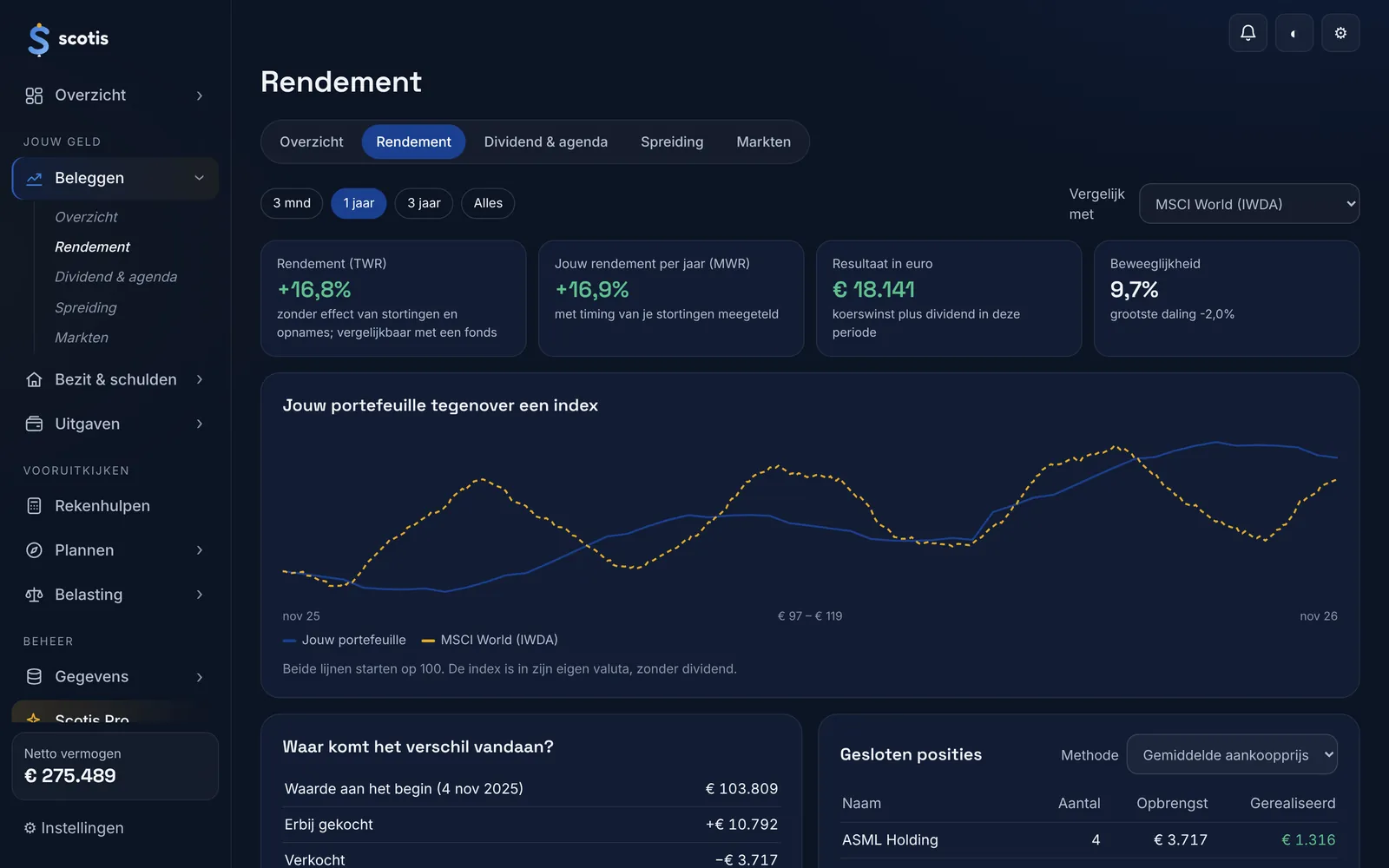
Time-weighted and money-weighted returns against an index of your choice, broken down into contributions, price return and dividends.
What you can do with it
TWR and MWR
TWR for comparing with a fund, MWR for your personal return. Including volatility and maximum drawdown.
Realised gains and losses
The result on sales, based on average purchase price or FIFO. Relevant for the future tax on capital gains.
Frequently asked questions
What is the difference between TWR and MWR?
The time-weighted return (TWR) measures your return regardless of when you invest; you use it to compare with a fund or index. The money-weighted return (MWR) is your personal return, including the timing of your deposits.
Does dividend count in my return?
Yes. Scotis splits your result into contributions, price result and dividend.
How is the result on sales calculated?
Using the average purchase price or FIFO, whichever you choose.
Updated on 7 November 2026.
Read next
Scotis gives information and worked examples using your own numbers, not financial or tax advice.
Try it with the demo first.
Click around with the numbers of a sample household. If you like it, start with your own numbers.
Try the demo